

Sciatica Pain
Sciatica Pain shows up as a nagging pain shooting down your leg . You might be wondering what’s going on, and if there’s anything you can do about it. Sciatica is a common complaint that many people deal with at some point. It’s not just a simple ache; it’s pain that follows a specific path because of an issue with your sciatic nerve. Let’s break down what sciatica is, why it happens, and what options are out there to help you feel better.
Key Takeaways
- Sciatica is pain that travels along the sciatic nerve, which runs from your lower back down through your hips and legs.
- Common causes include herniated discs, spinal stenosis, and piriformis syndrome, all of which can put pressure on the sciatic nerve.
- Symptoms often include sharp pain, numbness, tingling, or weakness in the affected leg, which can worsen with certain movements.
- Treatment usually starts with non-surgical methods like physical therapy, medications, and sometimes injections, with surgery being an option for severe cases.
- Seeing a doctor, especially a physiatrist, is important for getting an accurate diagnosis and a personalized treatment plan to manage sciatica.
Understanding Sciatica Pain

What Is Sciatica?
Sciatica isn’t really a diagnosis on its own, but more of a symptom that points to a problem with your sciatic nerve. This is the longest and widest nerve in your body, stretching all the way from your lower back, through your hips and buttock, and then down each leg. When this nerve gets irritated or squeezed, you feel pain. It’s like a signal that something’s not quite right along that nerve’s pathway. The pain can feel different for everyone, ranging from a dull ache to a sharp, burning sensation.
Common Causes of Sciatica
So, what actually causes this nerve irritation? It usually comes down to something pressing on the nerve roots that make up the sciatic nerve. Think of it like a kink in a hose – it stops the flow and causes problems downstream. Some of the usual suspects include:
- Herniated or Bulging Discs: The soft, jelly-like center of your spinal discs can push out and press on the nerve. It’s a pretty common reason for sciatica.
- Spinal Stenosis: This is when the space within your spinal canal narrows, which can put pressure on the nerves as they exit your spine.
- Degenerative Disc Disease: As we age, our spinal discs can wear down, leading to changes that might irritate the sciatic nerve.
- Piriformis Syndrome: The piriformis muscle is deep in your buttock. If it spasms or gets tight, it can actually press on the sciatic nerve that runs nearby.
Recognizing Sciatica Symptoms
Spotting sciatica is usually pretty straightforward once you know what to look for. The main giveaway is the pain itself, but there are other signs too. It’s important to pay attention to how your body feels so you can get the right help.
- Pain Radiating Down the Leg: This is the classic sign. The discomfort typically starts in your lower back or buttock and travels down the back of your thigh, and sometimes all the way to your foot. It’s not usually felt on both sides of the body at once.
- Numbness, Tingling, and Weakness: You might also experience a pins-and-needles feeling, numbness, or even a noticeable weakness in the affected leg or foot. It can feel like that leg isn’t quite working right.
- When Symptoms Worsen: Often, sitting for long periods, coughing, sneezing, or even bending over can make the pain feel worse. This is because these actions can increase the pressure on the sciatic nerve. If you’re looking for ways to manage this, exploring non-surgical back pain treatment can be a good first step.
Exploring Sciatica Causes
Sciatica isn’t just a random ache; it’s a signal that something’s up with your sciatic nerve, that big highway of nerves running from your lower back all the way down your legs. When that nerve gets irritated or squeezed, you feel it. It’s not always the same thing causing the trouble, though. Lots of different issues can lead to that familiar sciatic pain.
Herniated or Bulging Discs
Think of the discs between your vertebrae like little jelly donuts. They have a tough outer layer and a soft, gel-like center. Sometimes, that outer layer can tear or bulge, and the soft stuff inside can push out. If this happens near the sciatic nerve roots, it can press on them, causing that shooting pain. It’s one of the most common culprits for sciatica. It can happen from a sudden injury or just from years of wear and tear.
Spinal Stenosis and Degenerative Disc Disease
Spinal stenosis is basically a narrowing of the spinal canal. Imagine a tunnel getting smaller – less room for everything inside, including your nerves. This narrowing can put pressure on the spinal cord and the nerve roots that branch off to form the sciatic nerve. Degenerative disc disease is related; it’s what happens as our discs age. They lose water, get flatter, and can become less effective shock absorbers. This can lead to instability and sometimes bone spurs, which can also narrow the space for nerves.
Piriformis Syndrome and Other Triggers
Sometimes, the problem isn’t directly in the spine. The piriformis muscle is a small muscle deep in your buttock. If this muscle gets tight or goes into spasm, it can actually press on the sciatic nerve as it passes nearby. This is called piriformis syndrome. Other things can trigger sciatica too, like injuries to the lower back or even prolonged sitting, especially on hard surfaces, which can put extra pressure on the nerve.
Identifying Sciatica Symptoms
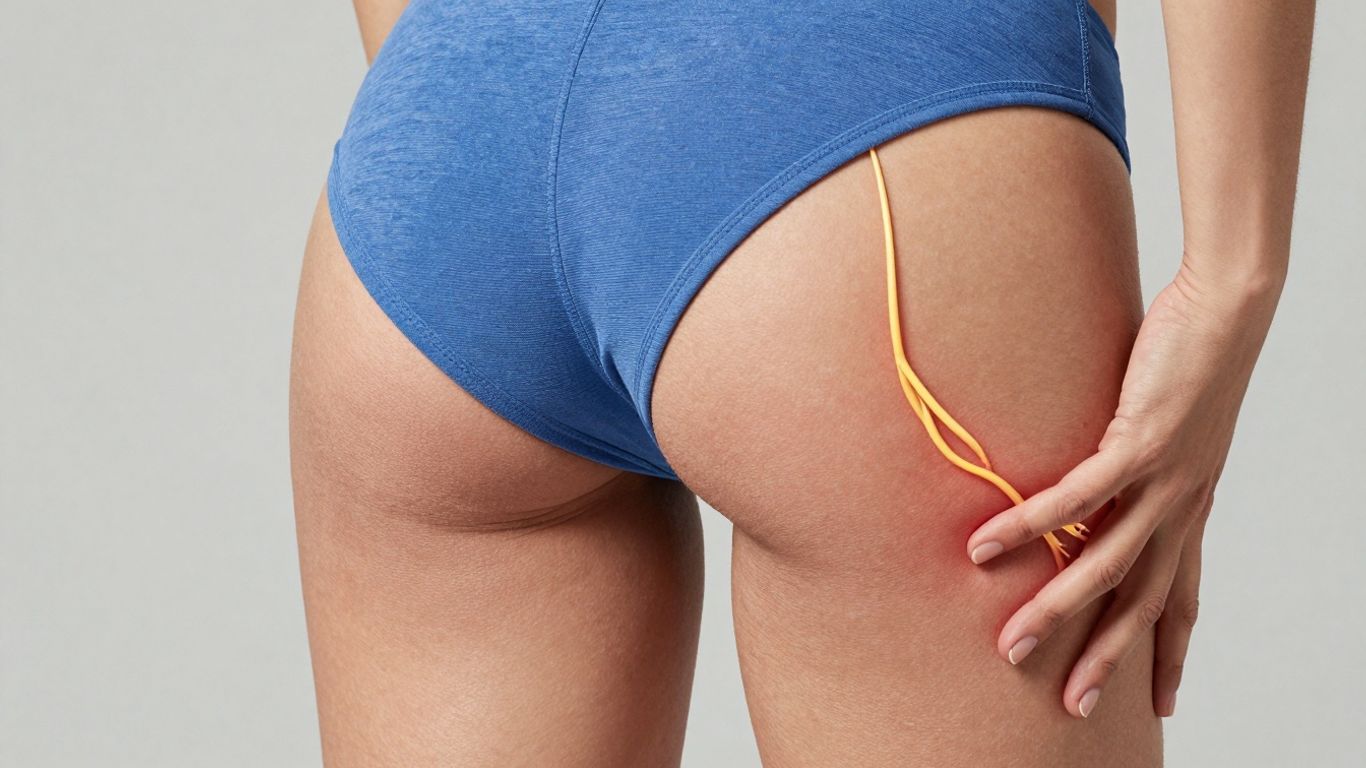
So, how do you know if what you’re feeling is actually sciatica? It’s not just a simple backache, that’s for sure. The pain usually follows a specific path, and there are a few other tell-tale signs.
Pain Radiating Down the Leg
The most common thing people notice is pain that starts somewhere in the lower back or buttock area and then travels down the leg. It’s like a pathway of discomfort. This pain can feel really different for everyone. Some folks describe it as a dull ache, while others get a sharp, burning sensation. You might even feel it like a jolt or an electric shock. It’s typically felt on just one side of the body, though it can happen on both. This radiating pain is the hallmark of sciatica.
Numbness, Tingling, and Weakness
Besides the pain, you might also experience other weird sensations in your leg or foot. Think of that feeling when your foot falls asleep – that pins-and-needles feeling? That’s common with sciatica. You could also feel actual numbness, like you can’t quite feel certain spots on your leg or foot. Sometimes, muscles in the leg or foot can feel weak, making it harder to walk, stand for long periods, or even lift your foot. It’s not just about the pain; these other nerve-related symptoms are big clues.
When Symptoms Worsen
What’s interesting is that sciatica symptoms often get worse with certain activities. Sitting for a long time, especially on a hard or unsupportive chair, can really aggravate it. Coughing, sneezing, or even straining can sometimes send a jolt of pain down your leg. Heavy lifting or sudden movements can also trigger a flare-up. It’s like these actions put extra pressure on that already irritated sciatic nerve.
It’s important to pay attention to how and when your symptoms change. This information can be super helpful when you talk to your doctor about what’s going on. Knowing your triggers helps in managing the condition better.
Here’s a quick rundown of common symptom patterns:
- Pain Location: Lower back/buttock radiating down one leg.
- Pain Quality: Can be sharp, burning, aching, or feel like an electric shock.
- Associated Sensations: Numbness, tingling (pins and needles), or muscle weakness in the leg or foot.
- Aggravating Factors: Prolonged sitting, coughing, sneezing, straining, heavy lifting.
- Timing: Often worse with certain movements or prolonged positions.
Effective Sciatica Treatment Options
Non-Surgical Approaches
When sciatica strikes, the first line of defense is usually non-surgical. These methods aim to reduce inflammation, ease pressure on the sciatic nerve, and get you moving more comfortably. Think of it as a gentle but firm approach to coaxing your body back to normal.
- Physical Therapy: This is a big one. A physical therapist will guide you through specific exercises designed to strengthen the muscles supporting your spine and improve flexibility. They’ll also work on stretching tight muscles that might be contributing to the nerve irritation. It’s all about building a stronger, more resilient you.
- Stretching: Simple, targeted stretches can make a world of difference. Focusing on areas like the lower back, hips, and hamstrings can help release tension along the sciatic nerve. Consistency is key here; a few minutes each day can prevent bigger problems down the road.
- Lifestyle Adjustments: Sometimes, it’s the little things. Avoiding prolonged sitting or standing, improving your posture, and using proper lifting techniques can significantly reduce strain on your back and the sciatic nerve.
It’s important to remember that what works for one person might not be the perfect fit for another. Finding the right combination of non-surgical treatments often involves a bit of trial and error, guided by a healthcare professional.
Medications and Injections
If conservative measures aren’t quite cutting it, medications and targeted injections can offer additional relief. These are typically used to manage pain and inflammation more directly.
- Pain Relievers: Over-the-counter options like ibuprofen or naproxen can help with mild to moderate pain and inflammation. For more severe pain, a doctor might prescribe stronger medications.
- Muscle Relaxants: If muscle spasms are contributing to your sciatica, these can be very helpful.
- Corticosteroid Injections: These injections deliver a powerful anti-inflammatory medication directly to the area around the irritated sciatic nerve. They can provide significant, though often temporary, relief by reducing swelling and inflammation. This is usually done under imaging guidance to ensure accuracy.
When Surgery Becomes Necessary
Surgery is generally considered a last resort for sciatica, typically reserved for cases where conservative treatments haven’t worked after a significant period, or when there are severe neurological symptoms like progressive weakness or loss of bowel or bladder control. The goal of surgery is to address the specific underlying cause of the nerve compression.
- Microdiscectomy: If a herniated disc is the culprit, this minimally invasive procedure involves removing the portion of the disc that’s pressing on the nerve. It’s often done through a small incision.
- Laminectomy/Decompression: For conditions like spinal stenosis, where the spinal canal narrows, surgery might involve removing a small part of the bone or ligament to create more space for the nerves.
- Spinal Fusion: In cases of significant instability, like with spondylolisthesis, fusion might be recommended to stabilize the affected vertebrae.
Seeking Professional Sciatica Care
When sciatica pain starts messing with your daily life, it’s time to get some expert help. Trying to figure out what’s going on all by yourself can be tough, and honestly, you might just make things worse. That’s where professionals come in. They’ve got the know-how to get to the bottom of your pain and set you on the right path to feeling better.
The Role of a Physiatrist
A physiatrist, also known as a physical medicine and rehabilitation doctor, is a great first stop for sciatica. They specialize in conditions affecting your nerves, muscles, and bones, and they focus on getting you back to your usual activities without necessarily resorting to surgery. They’re all about a patient-centered approach, looking at the whole picture to figure out the best way to treat your specific sciatica.
Diagnosis and Personalized Plans
Getting an accurate diagnosis is super important. A physiatrist will start by talking to you about your symptoms and doing a physical exam. They might also order imaging tests, like X-rays or an MRI, to get a clearer look at what’s happening in your spine. This detailed assessment helps them pinpoint the exact cause of your sciatic nerve irritation. Based on this, they’ll create a treatment plan that’s just for you. This plan could include a mix of things:
- Physical Therapy: Specific exercises to strengthen your core, improve flexibility, and reduce pressure on the nerve. This is often a cornerstone of sciatica pain management.
- Medications: Over-the-counter or prescription drugs to help with pain and inflammation.
- Injections: Targeted steroid injections to calm down inflammation right where it’s causing problems.
Rehabilitation and Lifestyle Advice
Beyond just treating the immediate pain, physiatrists focus on rehabilitation. They want to help you regain your strength and mobility so you can get back to doing the things you enjoy. They’ll also give you advice on how to adjust your daily habits to prevent future flare-ups. This might include tips on improving your posture, setting up your workspace ergonomically, or learning safer ways to lift heavy objects. It’s all about making lasting changes to support your recovery and long-term well-being.
Managing Sciatica Flare-Ups
Daily Activities That Trigger Sciatica
Sometimes, it feels like sciatica just shows up out of nowhere, right? But often, there are little things we do every day that can really set it off. Prolonged sitting, especially on a hard or unsupportive chair, is a big one. It puts extra pressure on your lower back and can irritate that sciatic nerve. Think about it – if you’re hunched over a desk for hours, your posture isn’t exactly helping.
Then there’s heavy lifting or sudden movements. If you’re not using proper form, you can easily strain your back. Jobs that involve a lot of bending, twisting, or lifting are notorious for this. Even something as simple as bending over to tie your shoes incorrectly can sometimes be enough to trigger a flare-up.
Here are a few common culprits:
- Prolonged Sitting: Especially with poor posture or on unsupportive surfaces.
- Heavy Lifting: Particularly when done with improper technique.
- Sudden Twisting or Bending: Unexpected movements can jolt the spine.
- Repetitive Motions: Certain jobs or activities can put consistent strain on the back.
It’s easy to overlook how much our daily habits contribute to pain. Paying attention to how you sit, stand, and move can make a surprising difference in preventing those sudden, sharp pains.
Physical Therapy and Stretches
When a flare-up hits, the instinct might be to just rest, but often, gentle movement and specific exercises are what you really need. Physical therapy is a game-changer here. A therapist can show you exactly what to do – exercises that help reduce inflammation and ease the pressure on your sciatic nerve. They’ll tailor a plan just for you, which is way better than just guessing.
Stretching is also super important. Simple stretches can help loosen up tight muscles in your hips and glutes that might be squeezing the nerve. Doing these regularly, even when you’re not in pain, can help keep things from getting bad again.
Here are a few stretches that are often recommended:
- Knee-to-Chest Stretch: Lie on your back, bring one knee towards your chest, holding for 20-30 seconds. Repeat on the other side.
- Piriformis Stretch: Lie on your back with knees bent. Cross one ankle over the opposite knee and gently pull the supporting thigh towards you.
- Seated Spinal Twist: Sit on the floor with legs extended. Bend one knee and cross that foot over the opposite leg, gently twisting your torso towards the bent knee.
Preventative Measures for Sciatica
Preventing sciatica flare-ups is all about being mindful of your body and making smart choices. It’s not just about what you do when you’re in pain, but what you do all the time. Strengthening your core muscles is a big one. A strong core acts like a natural brace for your spine, offering better support and reducing the load on your lower back.
Maintaining a healthy weight is also key. Extra weight, especially around the midsection, puts added stress on your spine. Even small weight losses can make a noticeable difference.
Here’s a quick rundown of preventative steps:
- Strengthen Your Core: Focus on exercises that build abdominal and back strength.
- Maintain a Healthy Weight: Excess pounds can put pressure on your spine.
- Practice Good Posture: Be mindful of how you sit and stand throughout the day.
- Use Proper Lifting Techniques: Always bend your knees and keep your back straight when lifting.
- Stay Active: Regular, low-impact exercise like walking or swimming can help keep your back healthy.
Wrapping Up Sciatica
So, sciatica can really throw a wrench in your day-to-day life, that’s for sure. We’ve talked about what it is, why it happens – like those pesky herniated discs or tight muscles – and how it feels, from a dull ache to sharp pain shooting down your leg. The good news is, you’ve got options. Whether it’s physical therapy to get things moving better, medication for relief, or in some cases, injections or even surgery, there are ways to tackle this. The main thing is not to just tough it out. Getting a proper diagnosis is key to figuring out the best plan for you. Don’t hesitate to chat with your doctor about what’s going on; they can help you find the right path to feeling more comfortable and getting back to your usual routine.
Frequently Asked Questions
What exactly is sciatica?
Sciatica is basically pain that shoots down the path of your sciatic nerve. This nerve is like a long highway that starts in your lower back, goes through your hips and backside, and then travels all the way down each leg. When something irritates or squeezes this nerve, you feel that pain.
What usually causes sciatica?
Most of the time, sciatica happens because something is pressing on the sciatic nerve. This could be a slipped disc in your spine, a condition where the space in your spine gets too narrow (called spinal stenosis), or sometimes a muscle in your buttock called the piriformis muscle gets tight and squeezes the nerve.
How can I tell if I have sciatica?
The main sign is pain that starts in your lower back or buttock and travels down one leg. You might also feel numbness, a tingling “pins and needles” feeling, or even weakness in your leg or foot. Sometimes, this pain gets worse when you sit or stand for a long time.
What’s the best way to treat sciatica?
Often, the best treatments don’t involve surgery. Things like physical therapy to strengthen your muscles and improve flexibility, taking pain medicine, or getting special shots to reduce swelling can help a lot. Finding the right treatment usually means figuring out what’s causing your sciatica first.
When should I worry about my sciatica symptoms?
While mild sciatica often gets better on its own, you should see a doctor if the pain is really bad, lasts for more than a week, or if you start having trouble controlling your bladder or bowels. Also, if you have significant weakness in your leg, it’s important to get checked out.
Can I do anything to prevent sciatica from coming back?
Staying at a healthy weight can help reduce pressure on your spine. Regular exercise, especially exercises that strengthen your back and core muscles, is super important. Also, paying attention to your posture and taking breaks to stretch, especially if you sit a lot, can make a big difference.
We’d Love To Hear From You!
Call 512-255-7246 or click below to schedule an appointment.